What Climate Resilient Crops Actually Are
As climate disruptions intensify, the agricultural sector is under pressure to adapt. One major innovation leading the charge is the development of climate resilient crops varieties specifically designed or bred to withstand the environmental volatility we increasingly face.
What Are Climate Resilient Crops?
Climate resilient crops are plants that have been: Bred through traditional methods or Engineered with modern biotechnology
…to survive and produce under extreme or fluctuating climate conditions. These crops are developed with specific stress tolerant traits in mind.
Key Traits That Make a Crop Resilient
Climate-resilient crops contain an assortment of following features to excel in unstable conditions: Drought resistance tolerance of scarcity of water or periods of dry weather Thermal resistance survival and ability to remain productive under heat Flood tolerance adaptability to grow under or recover from being flooded Resistance to diseases and pests immunity against climate change factors contributing to pest population increase These traits become vital innovations in areas where conventional crop varieties are threatened due to growing unreliability in the climate.
Examples in Action
We are seeing the implementation of several climate-resilient crops already. Some successful examples include flood-tolerant rice in South and Southeast Asia, which can withstand being completely submerged in water for a couple of days without losing much, heat-tolerant wheat in the drier regions ( semi-arid), for farmers who do not have the luxury of harvesting when they would traditionally do so during heat spells and rising temperatures and drought-resistant maize in the arid regions of Africa, outperforming traditional crops.
These examples highlight both the potential and necessity of climate resilient crops they’re not just theoretical solutions, but real tools helping secure the future of global food production.
Why We Need Them Now
This is hardly unpredictability, this is utter predictability coupled with relentlessly abnormal weather patterns. These are not random events anymore: Heatwaves, floods, droughts occur routinely around the world, crippling crops at a time when the planet can least afford these kinds of disruptions. Our global food systems, not equipped to handle this volatility as a new norm, are suffering. While crops dwindle in some areas and flood elsewhere, the planet’s poor-especially subsistence farmers-are the ones hit hardest, those who feed themselves and neighbors but lack any meaningful support, subsidies or fallbacks. Given the ever-growing world population, agriculture cannot only survive climate change but must drastically scale up. Predictable and secure yields are no longer a bonus, they are required to ensure the world’s survival.
This is where climate resilient crops step in. Think of them as a stopgap plants bred or engineered to endure the new normal. Drought tolerant grains, flood hardy rice, heat resistant vegetables. They won’t solve everything outright, but they buy us time. Time for energy transitions, smarter land use, and bigger agricultural reform. In the meantime, they help keep food on the table.
It’s not just an agricultural shift it’s a survival strategy.
The Science Behind the Seeds
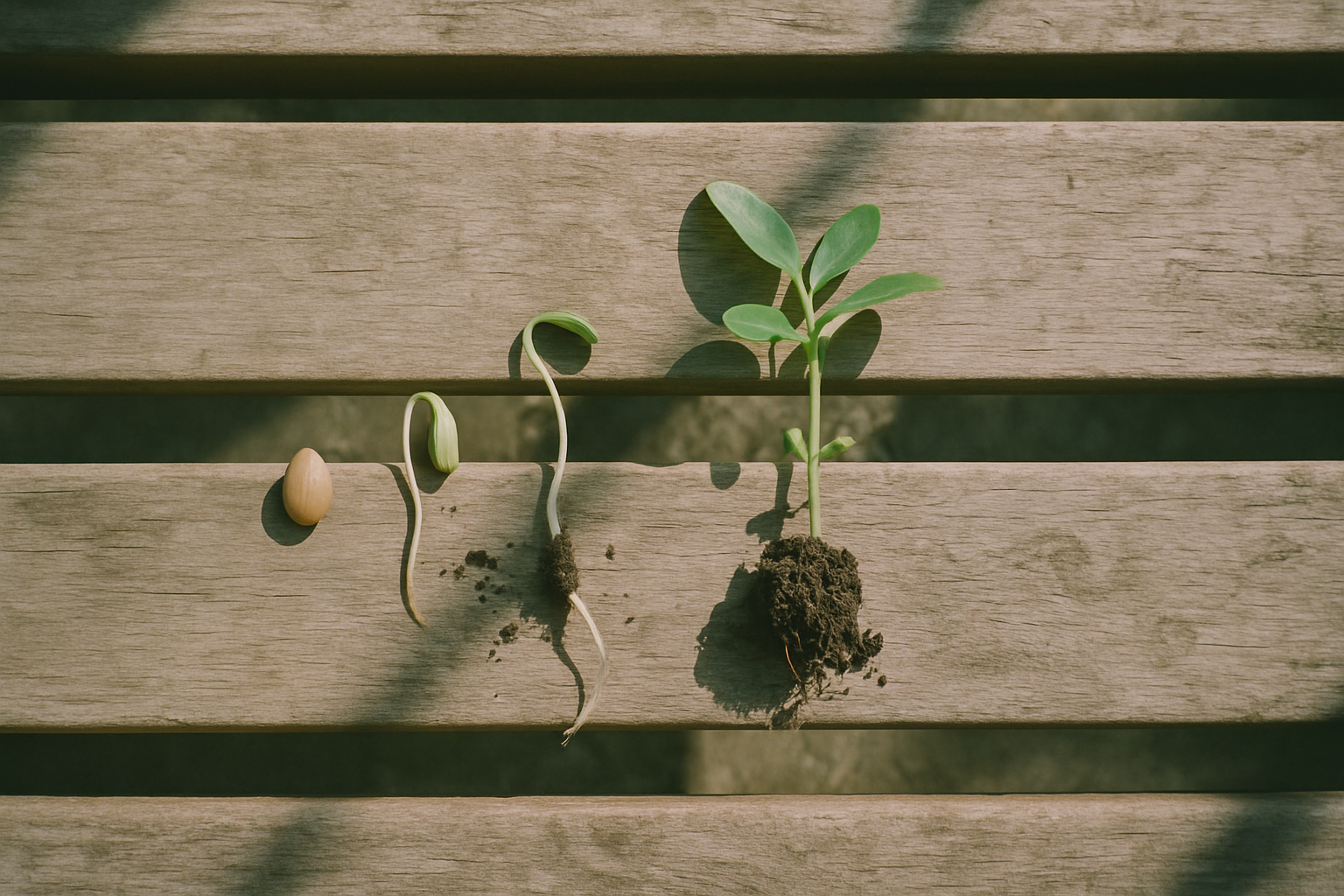
All climate-smart crops, however, are not created through sophisticated gene labs. The process of selectively breeding plants with favorable traits over countless generations, a method passed down through centuries of traditional breeding practices, does take some time, but it is the manner by which our food crops have developed over the course of thousands of years of existence (and you can thank its processes for a tough, dry-tolerant sorghum and salty soil-resilient rice).
Because, however, our climate is shifting at an increasing pace, researchers are applying the tools of science more fully by utilizing gene modification technology to insert key traits directly into plants so that they do not require generations to develop, using gene-editing technologies, such as CRISPR, to confer traits like salt tolerance, heat resistance or disease immunity on already existing crops-so that these attributes will be passed down automatically through plant reproduction.
By these techniques we get our first three-dimensional view on plant life and its attributes, we make smarter crops much faster. However, no one is doing this work in isolation: scientists have started working more closely with the growers whose farmlands produce crops of varying types, along with agricultural startups, to combine laboratory breakthroughs with practical farming realities.
Growers share traditional knowledge and local agricultural information with researchers. Agri tech firms contribute the facilities and knowledge to determine if particular plant discoveries are applicable and viable at the commercial level, meanwhile scientists, with the aid of these collaborations, can go back to laboratories, test and develop more ideas for more plant attributes, then re-seed and re-grow with more ideas tested and the same collaborative feedback.
A quiet, important force in the push for crop resilient seeds is the humble seed bank: A bank for seeds of crop diversity stored across the globe so that future generations may be prepared for upcoming droughts, salinity and heat through genetic resource. It contains an ancient wheat that grows in an arid region, an old type of fruit tree capable of producing ripe berries after a sudden frost, a rediscovered tomato variety resistant to local blights that used to destroy tomato yields on a farm that lies adjacent to a river.
Real World Impact: What’s Happening on the Ground
Climate resilient maize varieties are helping African smallholder farmers survive increasingly long dry seasons common in countries like Kenya and Malawi, with several studies showing 10-30% higher yields in such areas compared to conventional types of maize grown in such environments, while not guaranteeing harvests but offering farmers a stronger baseline in the face of weather instability when the planting season falls later or yields less than usual.
Rice farmers in Bangladesh and India also continue to benefit from submergence tolerance technology with an Indian variety known as “scuba rice, ” capable of surviving two to three weeks under floodwaters, thus, improving food security, in addition to helping smallholders maintain their incomes, since, without reliable yields year to year, many farmers in the flood-prone region have previously struggled to achieve stability with years of success being obliterated by the loss of a single bad year.
Meanwhile, on the American Midwest, farmers facing more extreme heat waves combined with unpredictable rainfall are looking towards soybean breeders trialing new strains of the commodity, namely, heat-resistant, fast-maturing and even a variety that matures early enough to avoid the peak temperatures of summer.
Farmers participating in a trial reported a more stable, higher soybean yield even under conditions of severe water deficit. While promising, the widespread implementation is far from universal because farmers are inherently risk-averse and are typically cautious about purchasing seeds at a higher cost, with meager state assistance in areas without functioning agribusiness co-operatives still remaining issues for farmers looking for cheaper, readily accessible alternatives that fit their local farming climate and infrastructure.
In addition to all economic considerations, as several scholars emphasize, questions exist concerning ownership of intellectual property, the extent to which large, foreign agricultural firms will be the ultimate winners from broad deployment of improved seeds and crops, whether greater adoption and commercial success of large numbers of genetically identical crops will lead to loss of biodiversity, the nature of the partnerships and trusts that may need to be forged between those who sell and distribute climate resilient seeds and the millions of farmers who will use them and the degree to which new seed technologies can and should come with support in terms of training, investment in the community and agricultural research.
Holistic Adaptation Strategies
A drought tolerant or pest and flood-tolerant crop are all wonderful but useless pieces if they are not planted in fertile ground that receives enough rain to sustain it. Throw a bunch of heat tolerant plant DNA in dry and poor quality soil and do not be amazed when nothing grows. True sustainability cannot be created solely from genetics, it involves coupling robust genetics with healthy soil, improved water access, resilient farming techniques, sustainable cultivation (including practices that yield much more useful work per input amount, in addition to simply improving resilience). It needs cover cropping, rainwater harvesting and storage, precision drip irrigation, appropriate use of manure for composting in lieu of synthetic alternatives.
There is never truly just a single issue when you are talking about farming. Long-term adaptation efforts simply can never be successfully enacted without the full collaboration and input of farming communities, right from the beginning.
You have great climate resilient rice or potato grown in an idealized greenhouse on a test farm somewhere, that simply does not mean the farmers want to be planting rice and potatoes day in and day out as it is. Those adapted varieties and cultivation techniques will eventually need to align with local traditions, culture and property laws.
We just discussed the breeding programs, another large area of progress is agricultural adaptation, including education, training, water management policies, insurance policies, microfinancing, etcetera. Visit the Adapt Farming to Climate webpage.
Moving Forward
Yes, climate resilient crops are a start, but they are definitely not the entire story. We are looking at the current bottleneck of policy and financing, since as science races ahead with solutions, governmental support is severely lagging behind. Many of those organizations are simply underfunded, lack infrastructure on the ground in regions that truly need it the most and have little ability to reach the smallholder farmers ( who constitute the majority of the world’s food producers, many in vulnerable areas) with the concrete assistance they require.
Access and training will be just as critical. Giving farmers climate resilient crop seeds will accomplish virtually nothing if they do not have the training to work with these new climate resilient crops and adaptation practices or to understand how best to integrate them into their farming systems to ensure overall resilience.
Furthermore, public as well as private sector information about access and use needs to be transparent and accessible. Loss of trust happens in a blink when information is guarded. The purpose is a resilient and equitable food system capable of weathering the coming climate shocks with no collapse, backed by scalable science and accessibility that serves all stakeholders in the chain and not only the large landowners and commercial agriculturalists of the industrialized countries. This is not a strategy that has any future if it does not meet those criteria.
Adapt Farming to Climate provides excellent guidance on how farmers can bolster their resilience by adopting practices outside of seed innovation alone.